Best 3D Printers for Large Prints
A large-format 3D printer is one with a build volume of roughly 300mm or more in at least two dimensions - large enough to print cosplay helmets, RC car bodies, architectural models, and tall vases in one piece instead of splitting and gluing. The enclosed-CoreXY sweet spot is 350mm (Creality K2 Plus); affordable open-frame machines now reach 400-420mm (Creality Ender-5 Max, Anycubic Kobra 3 Max) for well under $800; and the largest consumer printer you can actually buy is the 800mm Elegoo OrangeStorm Giga. Below: what build volume you actually need for common large prints, picks across budget tiers, the biggest printers you can buy, the real trade-offs of going big, and an expanded FAQ.
In a hurry? Our top picks:
What to look for
Build volume
300mm+ in at least two dimensions is the entry point for 'large format'. The larger the build volume, the fewer seams you need to glue. Check our Build Volume Checker tool to see what fits.
Frame rigidity
Large printers need rigid frames to maintain accuracy at the build volume extremes. CoreXY designs excel here, which is why nearly all current large-format machines use them.
Print speed
Large prints take a long time. A fast CoreXY printer dramatically reduces total project time - the difference between a 24-hour and a 50-hour print on a tall model.
Heated bed uniformity
Large beds can have hot and cold spots that cause corner warping. Look for thick aluminum beds or independent zone heating on bigger machines.
Quick comparison
| Printer | Build Volume | Max Speed | Tech | Price |
|---|---|---|---|---|
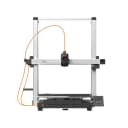
| Anycubic Kobra 3 Max | 420×420×500mm | 600 mm/s | FDM | $469.99 |
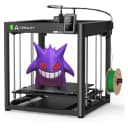
| Creality Ender-5 Max | 400×400×400mm | 700 mm/s | FDM | $749 |
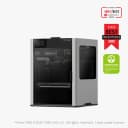
| Bambu Lab H2D | 325×320×325mm | 1000 mm/s | FDM | $1749 |
Our picks
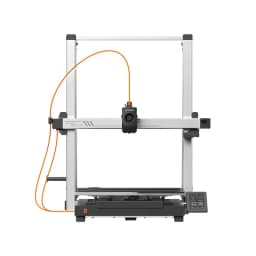
Anycubic Kobra 3 Max
- • $469.99 — Anycubic Kobra 3 Max
- • Fast: up to 600 mm/s
- • Auto-leveling for hassle-free setup
- • Large build volume: 420x420x500mm
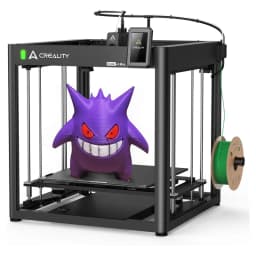
Creality Ender-5 Max
- • $749 — Creality Ender-5 Max
- • Fast: up to 700 mm/s
- • Auto-leveling for hassle-free setup
- • Large build volume: 400x400x400mm
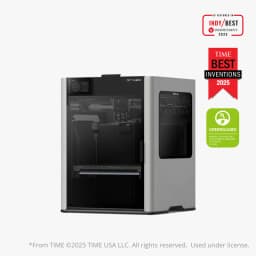
Bambu Lab H2D
- • $1749 — Bambu Lab H2D
- • Fast: up to 1000 mm/s
- • Enclosed for ABS/ASA and quieter printing
- • Auto-leveling for hassle-free setup
Common mistakes to avoid
- ×Assuming the full build volume is usable — some printers lose 5-10mm on each axis to clips or sensors
- ×Not checking bed leveling across the entire surface — large beds warp more than small ones
- ×Using tree supports on large prints without checking print time — they can double it
- ×Running a 40-hour print without a UPS or power failure recovery enabled
- ×Buying maximum build volume when you mostly print small — a big machine is slower to heat, costs more, and takes more desk space
- ×Printing large flat parts in ABS without an enclosure — corner warping will lift the part off the bed
What Counts as a Large-Format 3D Printer? Build Volume Tiers
There is no official standard, but in practice 'large format' means a build volume of roughly 300mm or more in at least two dimensions. The tiers below frame where a printer sits relative to the consumer market in 2026.
Build volume tiers and where current printers fall (2026)
| Tier | Build volume | Examples / notes |
|---|---|---|
| Standard desktop | 180-256 mm | Bambu Lab P1S (256mm), most beginner printers - not large format |
| Entry large-format | 300-330 mm | Creality K1 Max (300mm), QIDI Plus4 (305mm), QIDI Plus5 (320mm) - the threshold where 'large' begins |
| Enclosed sweet spot | 350 mm | Creality K2 Plus (350×350×350mm) - the practical enclosed-CoreXY standard |
| Affordable XL (open-frame) | 400-420 mm | Ender-5 Max (400mm), Kobra 3 Max (420mm), Neptune 4 Max (420mm) - large for well under $800 |
| Giant consumer | ~800 mm | Elegoo OrangeStorm Giga (800×800×1000mm) - the largest you can buy without industrial pricing |
| Professional / industrial | 1 m+ | BigRep, Modix and similar - steep price jump, outside consumer budgets |
Common Large Prints and the Build Volume They Need
The right build volume depends entirely on what you intend to print in one piece. The table below shows typical sizes for popular large-format projects and the minimum build volume to print each without splitting.
Typical large-print sizes and the minimum build volume to print in one piece
| Project | Typical size | Min build volume |
|---|---|---|
| Oversized cosplay helmet (Halo, Iron Man) | ~300 × 300 × 320 mm | 350 mm |
| Cosplay chestplate (split halves) | ~300 × 350 × 200 mm/half | 350 mm |
| RC car body (1/10 scale) | ~200 × 500 × 150 mm | 500 mm long axis (or split) |
| Tall vase / planter | ~250 × 250 × 400 mm | 300 mm wide, 400 mm tall |
| Architectural / terrain model | Varies; often 300 mm+ wide | 350 mm+ |
| Furniture prototype section | ~400 × 400 × 400 mm | 400 mm (or split into modules) |
| Full-face mask / cowl | ~220 × 250 × 300 mm | 256-300 mm |
| Drone / large quad frame | ~350 × 350 mm footprint | 350 mm |
Large-Format Trade-offs: Time, Warping, and Filament
Going big introduces three practical realities that do not affect smaller printers as much. Understanding them before you buy prevents the most common large-format disappointments.
Time. Large prints commonly run 20-50 hours, and a maxed-out build can exceed 60. Print time scales with volume and especially height, not just bed footprint. A fast CoreXY machine running 200-300mm/s real-world speeds roughly halves the time versus an older bedslinger - which is why nearly all current large-format printers are CoreXY. For any print over ~10 hours, enable power-loss recovery so a brief outage does not waste a full day.
Warping. The bigger the flat footprint of a print, the more it wants to lift its corners off the bed as it cools - especially in ABS, ASA, and nylon. This is why large enclosed printers exist: a stable heated chamber keeps the whole part warm enough to avoid differential shrinkage. For PLA and PETG, warping is manageable with good bed adhesion and a clean plate, even on an open-frame machine.
Filament. Large prints burn filament fast - 200-300g for a solid 300mm cube, 400-800g for a helmet, 3-5kg for an armor set. Two implications: budget for consumable cost, and strongly prefer a printer with a filament runout sensor, so an empty spool 30 hours into a 40-hour print triggers a pause-and-resume rather than a ruined print.
The Biggest 3D Printers You Can Actually Buy (2026)
If your goal is simply maximum build volume, here are the largest consumer FDM printers on the market right now, from the practical sweet spot up to genuinely giant. Build volume below is the usable X × Y × Z; you lose a few millimeters per axis to clips and the usable-edge margin, so size up slightly if a model sits right at the limit.
For most people the honest answer is that a 400-420mm machine (Ender-5 Max, Kobra 3 Max, Neptune 4 Max) covers essentially every consumer large-format need - helmets, full-size props, RC bodies, sign letters - for well under $800. You only need the 800mm OrangeStorm Giga if you print furniture-scale parts in one piece, and bigger always means slower heat-up, longer prints, more filament lost per failure, and more desk space.
Largest consumer 3D printers by build volume (verified 2026-09-26)
| Printer | Build volume (mm) | Type | Approx price | Best for |
|---|---|---|---|---|
| Elegoo OrangeStorm Giga | 800 × 800 × 1000 | FDM open-frame | ~$2,499 (Elegoo.com) | Furniture-scale single-piece prints |
| Anycubic Kobra 3 Max | 420 × 420 × 500 | FDM open-frame | ~$470 | Best value; tall prints + multicolor (ACE Pro) |
| Elegoo Neptune 4 Max | 420 × 420 × 480 | FDM open-frame | ~$389 (Elegoo.com) | Cheapest 420mm-class bedslinger |
| Creality Ender-5 Max | 400 × 400 × 400 | FDM CoreXY | ~$749 | Fast large cube (700mm/s) |
| Creality K2 Plus | 350 × 350 × 350 | FDM enclosed | ~$999 ($1,199 with CFS) | Large prints in ABS/ASA/nylon (enclosed) |
| QIDI Plus5 | 320 × 320 × 300 | FDM enclosed, heated chamber | ~$749 | Large engineering-material prints (65°C chamber, 370°C nozzle) |
Related tools
Frequently asked questions
Sources
- Creality K2 Plus (350mm build volume) product page — Creality (manufacturer)
- QIDI Tech Max 4 large-format review (390mm build volume) — 3DTechValley
- How Strong Are 3D Printed Parts? (warping & material reference) — 3DSourced
- Elegoo OrangeStorm Giga (800×800×1000mm) product page — Elegoo (manufacturer)
- How to split an STL to print large parts on a small printer — All3DP